
Selling Your Pembroke Pines Home While Buying Another: A Timing Guide
Do you sell your Pembroke Pines house first, buy the next one first, or try to close both on the same day? The honest answer is that it depends on three things: how much of your next down payment is locked inside your current home, how long you can carry two housing payments, and how much flexibility the other side will give you on closing dates. This guide gives you a way to test each path against your own numbers.
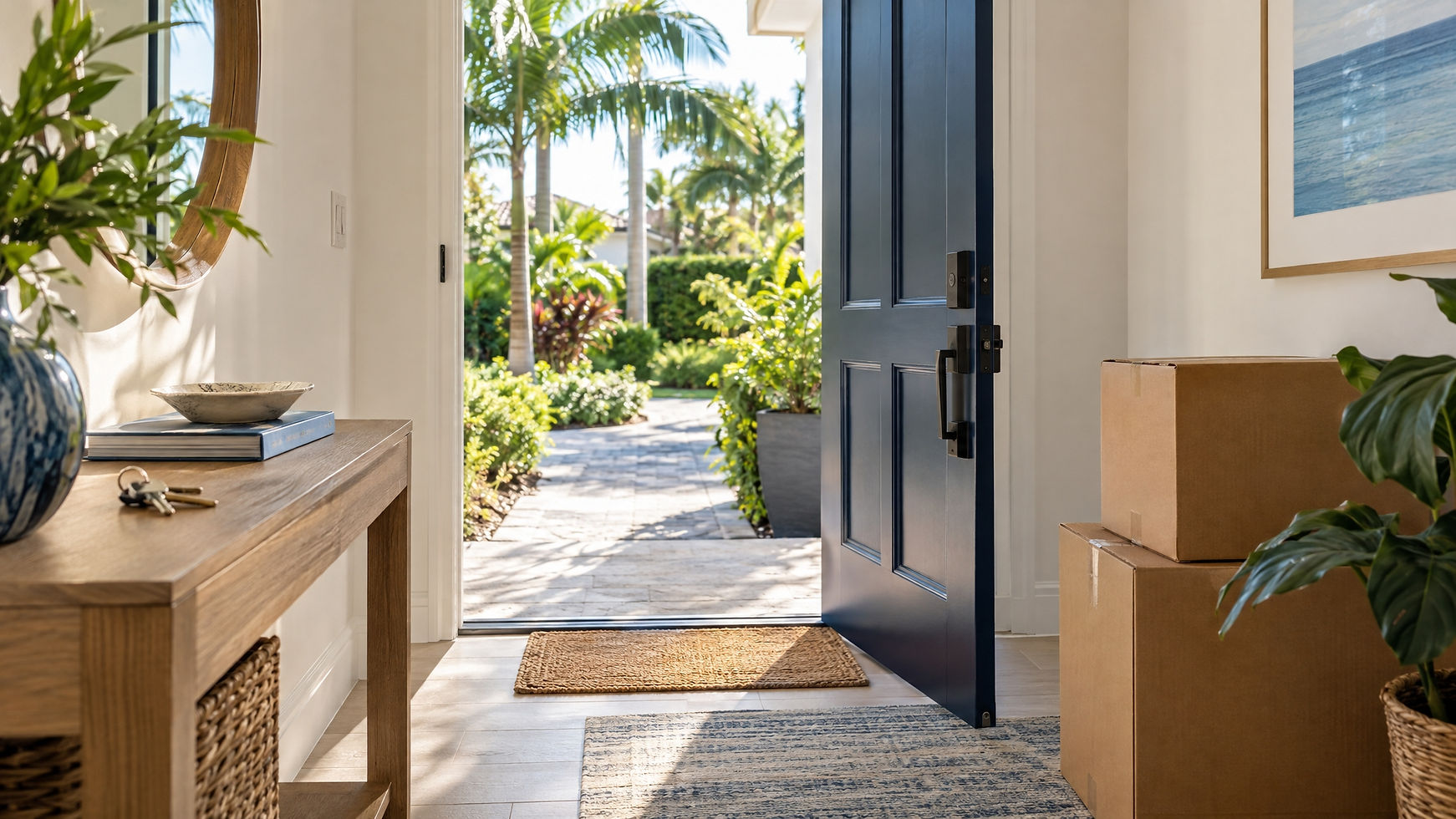
Illustrative image created for this article. It does not show a specific property.
Start with three numbers, not a strategy
Before you pick a path, write down three figures. Each one decides which path is realistic.
Estimated net proceeds. Your likely sale price, minus your mortgage payoff, minus selling costs and any repairs or concessions you expect to negotiate. Treat this as an estimate until a payoff letter and a contract exist.
Cash needed at the next closing. Down payment, closing costs, inspection fees, moving costs and a reserve.
The monthly payment you could carry if both homes overlap. This is the number that tells you whether buying first is even on the table.
For a sense of scale, Freddie Mac's weekly national average for a 30-year fixed-rate mortgage was 7.32% as of October 22, 2026. Your own rate depends on your lender, credit, down payment and loan type. Hypothetical example: an $800,000 loan at 7.32% over 30 years has a principal-and-interest payment of about $5,495 a month, before property taxes, insurance and any association dues. If you would owe that on top of your current mortgage for two or three months, you want to know before you make an offer, not after.
For local context, Redfin reported a median sale price of $472K for all home types in Pembroke Pines for the three months ending September 2026, down 6.5% from a year earlier, with a median of 74 days on market. That figure mixes houses with condominiums and townhomes, so it is a backdrop and not a price for your house. Your own comparable sales matter far more.
Path 1: Sell first, then buy
You list your home, accept an offer, close, and then buy with cash and a clean financing picture.
Works well when: you need the equity for your down payment, you cannot comfortably carry two payments, or your lender will not approve you for both loans at once.
Main risks: you may need a place to live between closings. If the seller of your next home will not wait, you could rent short term and move twice.
Questions to ask:
Can the buyer of my home agree to a rent-back, meaning I stay for an agreed number of days after closing under a written agreement?
Where would my belongings and my family stay if the gap is longer than planned?
Will my pre-approval still be valid when I find the next house?
Path 2: Buy first, then sell
You buy the next house while you still own the current one, then list yours.
Works well when: you have enough savings or income to qualify for and carry both properties, and you want to move without a deadline on your old house.
Main risks: two mortgages, two insurance policies, two sets of utilities and upkeep. The longer your Pembroke Pines home sits, the more this costs. Lenders will count both payments when they review your finances, so ask your loan officer how they treat the old mortgage before you shop.
Questions to ask:
What is my monthly cost for each additional month the old home is unsold?
Is there a price at which I would accept a sooner sale instead of waiting?
Path 3: Line up both closings
You time the sale and the purchase to close within days of each other, or on the same day.
Works well when: both transactions are well under contract and every party is willing to coordinate. It reduces double payments and moving twice.
Main risks: one delay can ripple through the other. A buyer's financing hiccup or a late repair on one side can push both dates.
Questions to ask:
Does each contract give me room to move the closing date by a few days if needed?
Who is coordinating the title companies or closing attorneys on both sides?
Contingencies in plain words
A contingency is a clause that makes your contract depend on something happening. Three come up in a sell-and-buy move.
Sale contingency. Your offer on the next home depends on closing the sale of your current one. Sellers often prefer offers without this clause, so it can make an offer less attractive. That is professional judgment, not a rule, and it varies with how many offers a home draws.
Financing contingency. Your purchase depends on getting your loan approved.
Closing date flexibility. Not a contingency by name, but a negotiated term that can matter just as much.
The exact wording of any clause comes from your signed contract, so have your agent and, where appropriate, a real estate attorney review it.
A sample calendar for aligned closings
Hypothetical example. These dates are only an illustration. Your contracts set the real ones.
Day 0: Home is listed after pricing is agreed.
Day 10: Offer accepted. You ask for a closing window that leaves room to buy.
Day 10 to 20: Inspection and appraisal on your sale. You begin the search for your next home with your pre-approval ready.
Day 20: Offer accepted on the next home, with a closing date a few days after your sale closing.
Day 20 to 45: Both inspection periods, loan processing and title work run in parallel.
Day 45: Final walk-throughs, closing figures reviewed, movers booked.
Day 48 to 50: Sale closes first and purchase closes right after, or on the same day.
Money and tax items to line up early
Homestead. If your Pembroke Pines home is your homestead, Florida lets you move part of your Save Our Homes assessment benefit, called portability, to a new Florida homestead, up to $500,000 of the difference. The application is due by March 1 and goes to the property appraiser of the county where the new home sits. For Broward, see the Broward Property Appraiser homestead page at bcpa.net/homestead.asp.
Gain on your sale. Federal rules can let you exclude up to $250,000 of gain ($500,000 for married couples filing jointly) on a main home if ownership and use tests are met, according to IRS Publication 523. Whether it applies to you is a question for your CPA.
Payoff letter. Ask your lender early so your net proceeds estimate rests on a real number.
Logistics checklist
Ask your lender how the old mortgage is treated in the new approval.
Confirm insurance on both homes through the closing dates.
Schedule movers with a flexible window.
Plan temporary housing even if you do not expect to need it.
Keep a folder with both contracts, inspection reports and closing figures.
Frequently asked questions
Is it better to sell first or buy first in Pembroke Pines?
Neither is better for everyone. Selling first is simpler when you need the equity. Buying first gives you more control over the move but costs more if the old home is slow to sell. Your net proceeds, reserves and lender approval decide it.
Can I make an offer that depends on selling my home?
You can ask for a sale contingency, but sellers may prefer an offer without one. Ask your agent how it is likely to be received for the specific home.
Do I owe tax when I sell my main home?
Not necessarily. Federal rules allow an exclusion of gain up to $250,000, or $500,000 for married couples filing jointly, if you meet the ownership and use tests. Confirm your situation with your CPA.
Can homestead benefits follow me to the next house?
Part of your assessment difference can be ported to a new Florida homestead, up to $500,000, if you apply by March 1. The property appraiser decides eligibility.
Next step
If you would like to see what your Pembroke Pines home could net before you plan the move, contact Dean Isenberg at 305-929-3326 for a free home valuation, or use the contact page.
Planning to buy, sell, or invest in South Florida? Contact Dean Isenberg at 305-929-3326 or visit ONE-Dean.com.
Dean is the ONE for all your real estate needs.


