
South Florida Homes with Deeded Boat Slips Buyer Guide
A boat slip can be the reason a waterfront property feels perfect, or the thing that causes the biggest surprise after closing. In South Florida, the condo, townhome, or single-family home is only half the purchase. The dockage matters just as much.
Buying a South Florida property with deeded boat slip access can give you more control than hoping for a marina waiting list or renting a slip nearby. But “comes with a slip” can mean several different things. The details affect what boat you can keep there, what it costs, how easy it is to reach open water, and how strong the resale story may be later.
This guide walks through what to check before buying in Aventura, Fort Lauderdale, Hallandale Beach, Hollywood, Hollywood Beach, Miami Beach, Bay Harbor Islands, Bal Harbour, Sunny Isles Beach, Miami, and selected Palm Beach County boating communities.

A deeded slip is not the same as an assigned or leased slip
This is the first thing to clear up. Listing descriptions can be casual, but ownership documents are not.
Slip type | What it usually means | Why it matters |
Deeded slip | The slip is generally conveyed as real property, a limited common element, or another recorded ownership interest | It may add resale value and can be easier to verify through recorded documents |
Assigned slip | The association assigns a slip for use, often under condo or HOA rules | The right may not transfer automatically, or the board may control assignments |
Leased slip | The owner rents the slip from the association, marina, or another owner | Monthly or annual costs and renewal terms matter |
First-come marina space | Dockage is available when open, with no specific secured space | Convenient for some owners, weaker for buyers who need reliable dockage |
A true deeded boat slip Florida buyer can rely on should show up clearly in the paperwork. That may include the deed, condo declaration, plat, survey, marina documents, or title commitment. Don’t rely only on a listing note or a verbal promise.
For condos, the slip might be a separate folio, a limited common element, or a transferable right tied to the unit. For homes, the dock may sit on privately owned land, submerged land, a seawall easement, or property controlled by another authority. Those differences can affect maintenance, insurance, future repairs, and transferability.
Start with the boat, not the bedroom count
A three-bedroom waterfront condo may look perfect online, but if the slip can’t handle the boat, the property doesn’t solve the problem.
Before touring, write down the vessel details:
Length overall, including platform, pulpit, and motors
Beam
Draft
Height above waterline
Power needs
Shore power amperage
Need for a lift
Need for liveaboard use, if any
Registration and insurance requirements
Then compare those details to the marina or association rules. Many communities limit vessel length, beam, height, noise, fuel type, commercial use, liveaboard stays, and the number of vessels per slip. Some also restrict personal watercraft, tenders, lifts, floating docks, dock boxes, and fish-cleaning stations.
This matters in places like Fort Lauderdale, where Fort Lauderdale boating homes can range from protected canal properties to large Intracoastal estates. It also matters for Aventura marina condos, Hallandale Beach boat slips, Hollywood waterfront condos, and Sunny Isles marina property, where condo associations may have very specific marina rules.
The best time to discover a boat restriction is before the offer, not after the survey.
Water access can change the value of the slip
South Florida boating is all about access. Two slips with the same stated length can feel very different once you factor in depth, bridges, current, wake zones, lock requirements, and travel time to the inlet.
Check water depth carefully
Ask about depth at the slip, in the fairway, and along the route out. Depth can vary with tide, silting, dredging history, and weather. A listing may describe the water as suitable for boating, but the better question is whether it suits a specific boat.
If a larger vessel has meaningful draft, order the right inspections and ask for current information. In some cases, a buyer may need a marine surveyor, dock contractor, or local captain to evaluate practical use. The phrase deep-water dock Florida buyers often search for sounds simple, but real depth needs to be confirmed.
Measure bridge clearance
Bridge clearance South Florida concerns are very real. Fixed bridges can rule out boats with towers, large hardtops, or high radar arches. Drawbridges may solve the height issue but add timing, traffic, and operating schedule concerns.
Miami Beach dock property, Bay Harbour boating property, Bal Harbour waterfront condos, and parts of Miami can involve different bridge routes depending on the exact canal, bay, or Intracoastal location. Fort Lauderdale has many boating neighborhoods with strong access, but bridge constraints still vary street by street.
Compare ocean access
South Florida ocean access is not one-size-fits-all. Some properties offer quick access to inlets. Others require a longer Intracoastal ride, bridge openings, or no-wake zones.
Common boating access points include:
Port Everglades in Fort Lauderdale
Haulover Inlet near Bal Harbour, Bay Harbor Islands, and Sunny Isles Beach
Government Cut in Miami
Lake Worth Inlet for Palm Beach County marina homes
Boynton Inlet for certain southern Palm Beach County properties
The best access depends on boating style. Offshore fishing, sandbar days, island runs, and Intracoastal cruising all have different priorities.

Ownership costs go beyond the purchase price
A condo with private dock access can be a strong lifestyle purchase, but the dock has its own cost structure. Before writing an offer, ask for the full picture.
Typical costs may include:
Marina association fees
Dock or slip maintenance charges
Seawall assessments
Electrical service charges
Water service fees
Pump-out fees
Lift maintenance
Dock lighting repairs
Insurance premiums
Special assessments
Permits for modifications or repairs
Marina association fees may be billed monthly, quarterly, annually, or through the condo or HOA budget. Some communities separate marina costs from residential dues. Others blend them together.
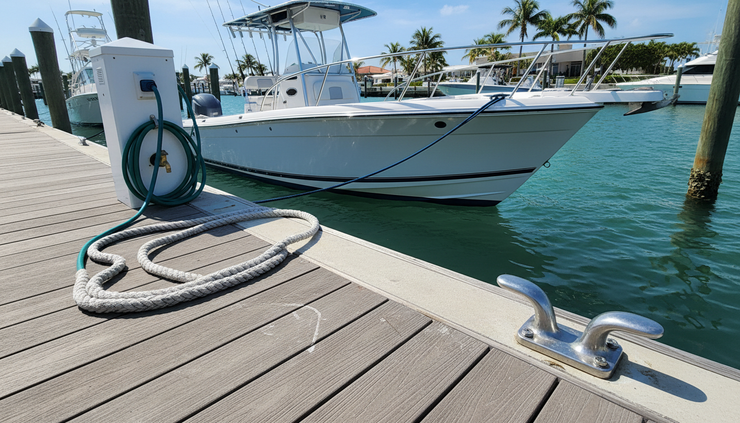
Dock maintenance costs can include pilings, cleats, decking, electrical pedestals, water lines, ladders, bumpers, and seawall connections. In a condo marina, the association may handle some items while the slip owner handles others. In a single-family home, the owner may carry most of the responsibility.
Boat slip insurance is another key piece. Coverage can involve the vessel policy, property insurance, liability coverage, windstorm considerations, and association master policies. Ask an insurance professional to review the setup before the inspection period ends.
Association rules can matter as much as the deed
Even when a slip is deeded, the association may still control use through governing documents. That’s normal. The issue is knowing the rules before closing.
Ask for and review:
Condo declaration or HOA declaration
Marina rules and regulations
Dock assignment records
Slip transfer procedures
Meeting minutes
Budget and reserve information
Recent special assessment notices
Insurance summaries
Approval requirements for buyers, tenants, boats, and captains
Rules for lifts, dock boxes, power upgrades, and repairs
Some communities allow slips to be sold or rented only to residents. Others allow outside owners, but only with approval. Some allow a slip to transfer with a unit but not separately. Some have waitlists that affect assigned slips but not deeded slips.
This is especially important for investors and seasonal residents. If a property will be rented, confirm whether the tenant may use the slip, whether the boat must be owner-registered, and whether short-term rentals are allowed at all.
Inspections should cover the property and the dock
A standard home inspection usually does not fully evaluate a dock, seawall, lift, electrical pedestal, or marine structures. For waterfront property inspection work, the buyer often needs specialized help.
Consider inspections for:
Dock decking and framing
Pilings and caps
Seawall condition
Davits or boat lift
Shore power pedestal
Water service
Lighting
Tie-off points
Access walkways
Signs of settlement, corrosion, or storm damage
For a condo marina, also review common-area maintenance records. A slip can look clean during a showing while the association is planning a major marina repair. Meeting minutes and reserve studies may give clues about future projects.
Permits matter too. If a dock, lift, seawall repair, or electrical upgrade was done without proper approval, the issue may surface later. Ask whether improvements were permitted and closed out. If documents aren’t available, make that part of the due diligence conversation.
Resale value depends on clean rights and practical use
A deeded slip can make a property stand out, especially when nearby marinas have limited availability. But the resale value depends on how useful and transferable the slip is.
A stronger resale story often includes:
Clear recorded ownership or transfer rights
A slip size that fits popular boat types
Reasonable access to open water
Manageable fees
Well-maintained docks and seawalls
Clear association rules
Good insurance and maintenance records
No unresolved permitting issues
A weaker resale story may include unclear ownership, tight vessel limits, difficult bridge routes, high future assessments, aging marina infrastructure, or rules that limit rentals and transfers.
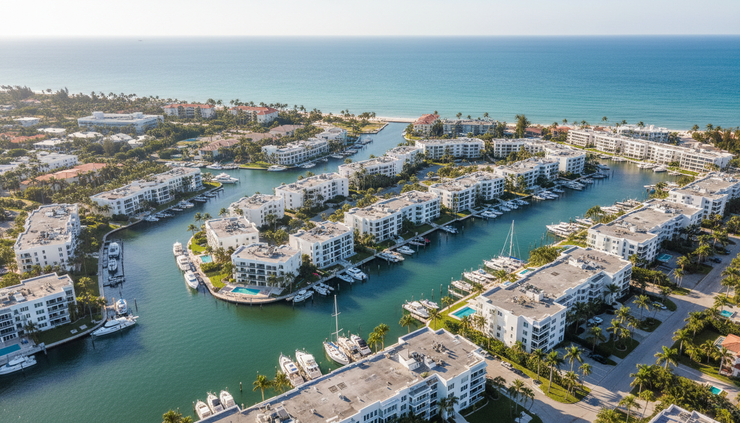
This is where neighborhood selection matters. Aventura, Sunny Isles Beach, Hallandale Beach, and Hollywood Beach may appeal to buyers who want condo convenience with dockage nearby. Fort Lauderdale has a deep pool of boating-focused neighborhoods. Miami Beach and Miami offer bayfront, canal, and island options with different access patterns. Selected Palm Beach County communities may offer a quieter boating feel, depending on location and route.
A good boating community Realtor can help compare those differences in plain language, not just by ZIP code.
How a Realtor helps protect the purchase
Buying waterfront property with a slip has more moving parts than a standard condo or home purchase. The right Realtor helps keep the deal focused on both the real estate and the boating use.
A strong process usually includes:
Confirming what is actually being sold
The Realtor can help request deeds, condo documents, marina agreements, slip maps, surveys, and title details.
Comparing boating communities
A buyer looking at Aventura marina condos may have different needs than someone comparing Fort Lauderdale boating homes or Palm Beach County marina homes.
Building the right contract terms
The offer can address slip transfer, included equipment, inspections, association approval, document review, and closing conditions.
Coordinating inspections
Dock, seawall, lift, marine electrical, and vessel-access questions may need different specialists.
Managing closing details
South Florida waterfront closing work may involve title, association estoppels, separate slip documents, lender questions, insurance, and final walkthrough checks.
Experienced guidance also helps with negotiation. If inspections show dock repairs, electrical upgrades, expected marina work, or unclear paperwork, those issues may affect price, credits, repairs, or whether the buyer should continue.
For more information about South Florida real estate, call Dean at 305-929-3326, email Dean@OneDean.Com, or visit Dean’s South Florida real estate site.
FAQ
Is a deeded boat slip better than an assigned slip?
A deeded slip usually gives clearer ownership or transfer rights, but the documents still matter. An assigned slip can work well if the association rules are stable and the assignment transfers in a way that fits the buyer’s needs.
Can I keep any boat in a deeded slip?
No. Vessel length, beam, draft, height, insurance, and registration rules may still apply. The slip may be deeded, but the association or marina can still regulate use.
Should I inspect the dock separately from the home or condo?
Yes. A standard property inspection may not fully cover the dock, seawall, lift, pilings, or marine electrical service. Waterfront and marine specialists can help identify issues before the inspection period ends.
Do marina fees affect resale value?
They can. Buyers often compare the total monthly or annual cost of ownership, including condo dues, marina fees, insurance, repairs, and assessments. Clear fees are easier to evaluate than vague or changing costs.
Can a Realtor verify slip ownership?
A Realtor can help request the right documents and coordinate with title, the association, and closing parties. Legal ownership questions should also be reviewed by the proper title or legal professionals.
The smart buy is the one that checks the slip first
A beautiful waterfront view is great, but the real value for a boater comes from usable, documented, well-managed dockage. Before falling in love with the kitchen or balcony, confirm the slip rights, vessel limits, water access, bridge route, fees, insurance, permits, and maintenance history.
This content is for general information only and isn’t legal, tax, insurance, or financial advice. For a specific purchase, work with qualified real estate, legal, insurance, marine, and inspection professionals.
The safest path is simple: verify the paperwork, test the boating fit, understand the costs, and negotiate with the full picture in front of you.


